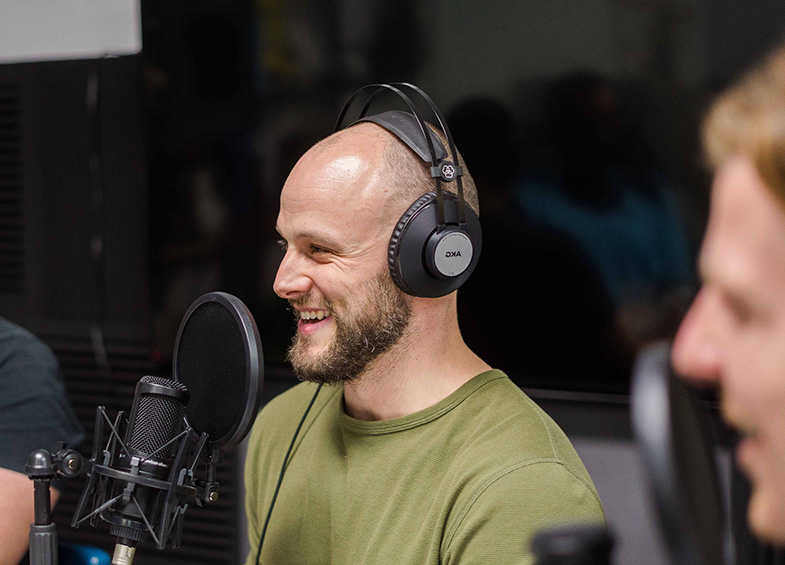
I recently had the pleasure of joining Donny Mac on the Freedive Café Podcast, where we explored the science of breathing, the nervous system, and how physiology shapes performance, stress, and human behaviour.
For those who don’t know my background, I originally trained as a respiratory and sleep scientist before founding the School of Breath Science, where we train practitioners to understand the deeper physiology behind breathing, nervous system regulation, sleep, and behaviour.
In this conversation we cover a wide range of topics at the intersection of breath science, performance, and freediving physiology, including:
• My journey from clinical respiratory science to founding the School of Breath Science
• The role of breathing in regulating the nervous system and human behaviour
• The physiology of CO₂, air hunger, and the urge to breathe
• Why breathing rate is strongly influenced by emotional state
• What chemoreceptors are and how they regulate respiration
• The role of the diaphragm as a type I oxidative muscle and its capacity to utilise lactate as a fuel source
• Research exploring max sprinting and the diaphragm’s lactate-clearing capacity
• How inspiratory muscle training can improve metabolic efficiency of the respiratory muscles
• My experience with breath holding, including a 3:30 breath hold on my first attempt
• Practical strategies for calming a stressed nervous system
• The benefits and limitations of hyperventilation-style breathing practices
• Intermittent hypoxic training and the realities of altitude adaptation
• Using sleep protocols to improve athletic performance
• Breathing techniques that help regulate arousal before high-pressure performance
• The power of controlled exhalation for calming the body
• Yogic breathwork and pranayama through the lens of physiology
• How traumatic experiences can occur during freediving and why hypercapnia sensitivity may play a role
• How HRV can be used meaningfully in real-world practice
• The importance of interoception and why some individuals struggle to feel and interpret internal bodily signals
It was a great conversation that bridges respiratory physiology, neuroscience, performance, and breathwork practice.
If you’re interested in understanding what is actually happening inside the body when we work with breath, this episode will give you a deeper look into the science.
Enjoy,
Martin