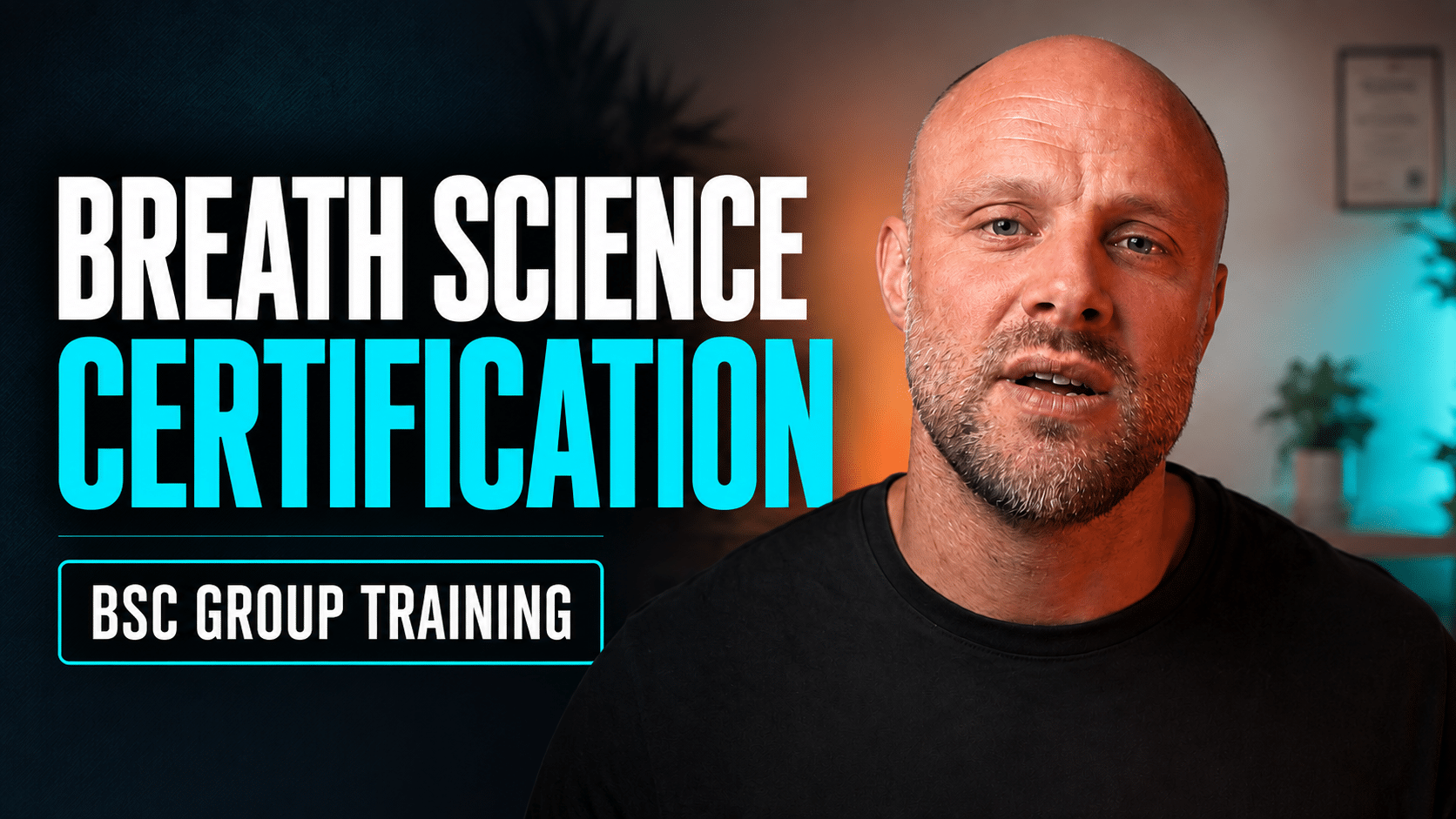
BREATH SCIENCE PRACTITIONER CERTIFICATION

The Breath Science Practitioner Certification (BSC) is a comprehensive professional training for coaches, therapists, health professionals and breath practitioners who want to move beyond isolated techniques and commercial methods, and develop the scientific understanding, assessment skills and practitioner reasoning required to work with greater depth, individualisation and professional judgement.
BSC integrates functional breathing, psychophysiology, nervous system regulation, somatics, sleep, exercise, behaviour, therapeutic breathwork and practitioner assessment into a broader educational framework, with an emphasis on understanding why people respond differently, adapting interventions to the individual, and making more informed decisions across complex real-world practice.
-
STRUCTURED EDUCATION
13 modules across approximately 7 months of formal practitioner education -
BREATH SCIENCE DOMAINS
Functional breathing, psychophysiology, sleep, exercise, behaviour and therapeutic breathwork -
SUPERVISED INTEGRATION
5 months of applied case work, practitioner development and integration -
PRACTITIONER CERTIFICATION
Final examination, applied case studies and competency-based assessment
BSC CURRICULUM
Why BSC is structured differently
Understand before you intervene
BSC develops the scientific understanding behind the practices you use, so decisions are informed by physiology, psychology, context and individual response rather than technique alone.
Integrate across multiple domains
Breathing does not exist in isolation. Learn to connect functional breathing, psychophysiology, sleep, exercise, behaviour, recovery and therapeutic breathwork when understanding the person in front of you.
Assess and individualise
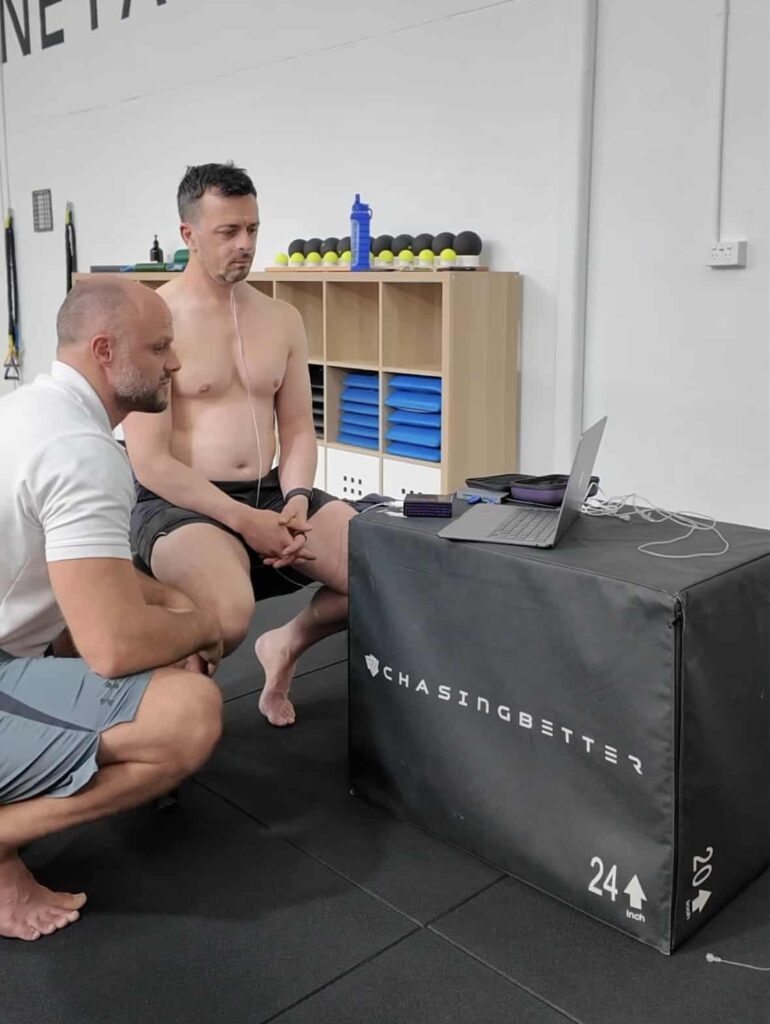
Move beyond predetermined protocols by learning how to gather relevant information, recognise patterns, identify appropriate starting points and adapt interventions according to the individual.
Develop practitioner reasoning
Learn to ask better questions, interpret what you are seeing and adjust your approach when a client does not respond as expected, while remaining aware of safety, professional scope and when referral may be appropriate.
HOW BSC WORKS

Structured Practitioner Education
Work through 13 progressive modules across approximately 7 months, integrating functional breathing, psychophysiology, sleep, exercise, therapeutic breathwork and practitioner reasoning.
Live Practitioner Integration
Join regular live sessions focused on deeper teaching, Q&A, practical application, case discussion, assessment skills and translating the science into real-world practice.
Applied Practice & Competency
Apply the learning through practical assessments, client work and case studies, demonstrating your ability to assess, individualise and make appropriate practitioner decisions.
Supervised Integration
Continue for 5 months beyond the structured education phase, integrating the material through case work, practitioner development and supported application into your professional practice.
WHERE BSC FITS IN YOUR PRACTITIONER PATHWAY
BSC is the School of Breath Science’s comprehensive practitioner certification for professionals who want deeper knowledge, assessment skills and individualised practitioner reasoning across multiple areas of breath science.
The programme integrates functional breathing, psychophysiology, sleep, exercise, behaviour, therapeutic breathwork and practitioner assessment into a broader framework for understanding and working with the person in front of you.
BRIT is not a prerequisite for BSC. Practitioners with relevant backgrounds in health, therapy, coaching, science, performance or breathwork may enter BSC directly when they are ready for this level of study.
For those looking for a shorter, more applied starting point, the Breath Resilience Instructor Training (BRIT) teaches a structured system for assessment, restoration, regulation and resilience, and provides a natural foundation for later BSC study.
BRIT teaches you a structured system you can apply.
BSC develops the broader knowledge and reasoning to work beyond a single system.
READY TO BEGIN BSC?
Applications are now open for the February 2027 Breath Science Practitioner Certification cohort.
BSC is a 12-month professional training for coaches, therapists, health professionals and breath practitioners seeking greater depth in breath science, assessment and individualised client work.
Complete the application below to share your background, goals and readiness for the training. If there appears to be a strong fit, I’ll contact you to discuss the next steps.
"*" indicates required fields